
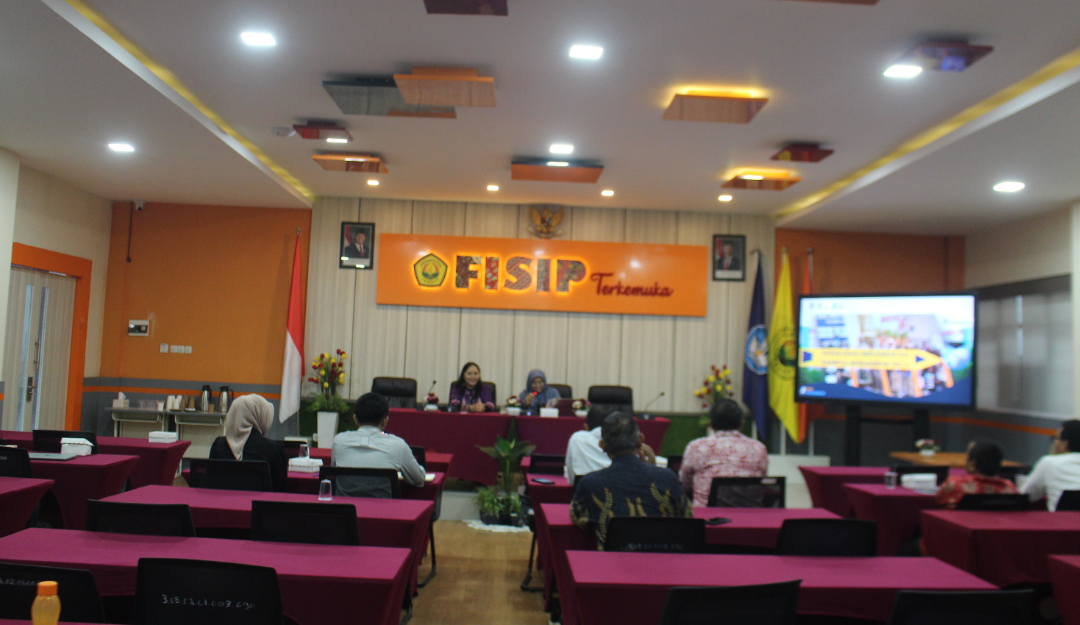
The Faculty of Social and Political Sciences (FISIP) at the University of Jember successfully convened a workshop dedicated to optimizing Off-Campus Learning (PLP) on Thursday, February 12, 2026. Held in the International Room of FISIP UNEJ, the event was strategically designed to refine the implementation of a curriculum that remains adaptive and responsive to contemporary challenges. The primary focus of the workshop was to ensure students receive a comprehensive educational experience, blending traditional classroom instruction with academically recognized off-campus activities.
The workshop was officially opened by the Vice Dean I for Academic Affairs and the Vice Dean III for Student Affairs and Alumni. In their opening remarks, the faculty leadership emphasized that the PLP program extends far beyond mere administrative formality; it serves as a vital instrument in elevating the quality of graduates. Synergy between academic and student affairs is paramount to ensuring students feel fully supported when exploring cross-disciplinary competencies, which will ultimately enhance their competitiveness in the global workforce.
The technical depth of the discussion was further enriched by the presence of expert facilitators from the Institute for Learning Development and Quality Assurance (LP3M) of the University of Jember. The facilitators outlined structured mechanisms for mapping courses that can be converted through various avenues, including internships, village community projects, student exchanges, and independent research. With clear guidance from LP3M, every study program within FISIP is expected to align its curriculum to be more flexible, thereby accommodating student interests and talents without compromising the core program learning outcomes.
Specifically, this workshop aimed to accelerate the achievement of Key Performance Indicators (IKU), with a particular focus on IKU 2, which measures students gaining experiential learning off-campus. An increase in student participation in the PLP program is viewed as a key indicator of institutional health in delivering modern educational services. Through standardized procedures and more efficient reporting systems, FISIP UNEJ remains highly optimistic about surpassing the IKU targets set by both the university and the ministry for 2026.
“The spirit of collaboration fostered here aims to create a dynamic academic ecosystem, ensuring that departmental boundaries no longer hinder students from becoming resilient and innovative learners.”
As the event concluded, the workshop produced a series of technical recommendations concerning the drafting of cooperation agreements with external partners and the upgrading of the academic information system. The participants—comprising heads of study programs and driving faculty members—committed to immediately disseminating the workshop’s outcomes to the student body, solidifying FISIP’s commitment to progressive education