
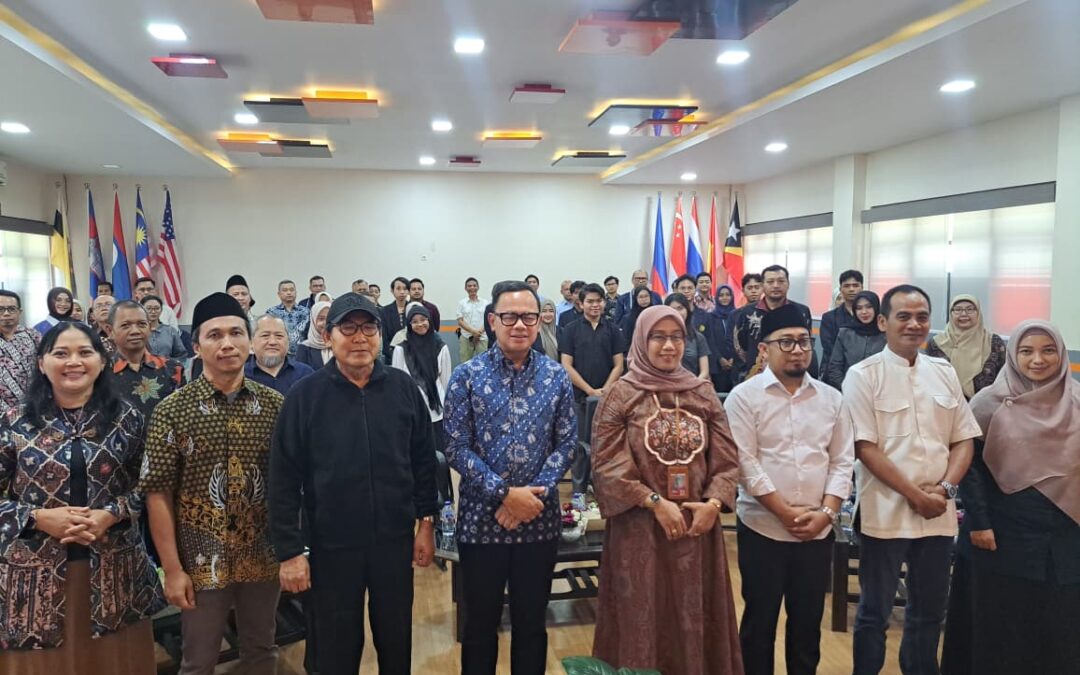
The true test of a leader lies not in the pursuit of power during a campaign, but in navigating policy for the welfare of the people. This profound message was the core theme of a book discussion on “Babad Alas” authored by the Vice Minister of Home Affairs, Bima Arya Sugiarto. The event took place at the International Room, Faculty of Social and Political Sciences (FISIP), University of Jember, on Friday (February 13, 2026). During the forum, regional leadership was underscored as a high-stakes gamble of integrity that is far more complex than mere political rhetoric on a podium.
Vice Minister Bima Arya offered a philosophical analogy, comparing regional leadership to the mythological puppet character Bima clearing the “Alas Amarta” (Amarta Forest)—a perilous process that demands a fine balance between courage and morality. He emphasized that the genuine challenges emerge post-election. While adversaries are clearly defined during a campaign, the line between ally and opponent often blurs once in office. Consequently, he argued, public policies must always be rooted in the long-term interests of the community, rather than fleeting political calculations.
Echoing these thoughts, the Regent of Jember, Muhammad Fawait—affectionately known as Gus Fawait—shared the field realities he faces in Jember. At the beginning of his tenure, Gus Fawait admitted to inheriting severe socioeconomic deficits, ranging from high stunting rates to extreme poverty levels that ranked among the highest in East Java. This critical situation compelled him to take bold strides in thoroughly reforming the bureaucracy and public services to address the basic needs of the citizens.
One of the radical breakthroughs initiated by the Jember Regency Government was the optimization of health insurance to achieve Universal Health Coverage (UHC) status. In addition to prioritizing the healthcare sector, Gus Fawait implemented a proactive approach to population administration services, extending them directly to the village level to eliminate bureaucratic hurdles for remote residents. On the economic front, he transformed the role of Regional Minimum-Owned Enterprises (BUMD) to function primarily as engines for the grassroots economy, rather than focusing solely on profit generation.
The engaging discussion at the University of Jember concluded that leadership effectiveness is measured by the courage to implement systemic change. Gus Fawait substantiated this commitment by reporting a significant increase in Local Genuine Revenue (PAD) over the past year. Ultimately, the book discussion served as a poignant reminder for aspiring leaders that strong governance requires unwavering principles and a genuine alignment with the people they serve.