
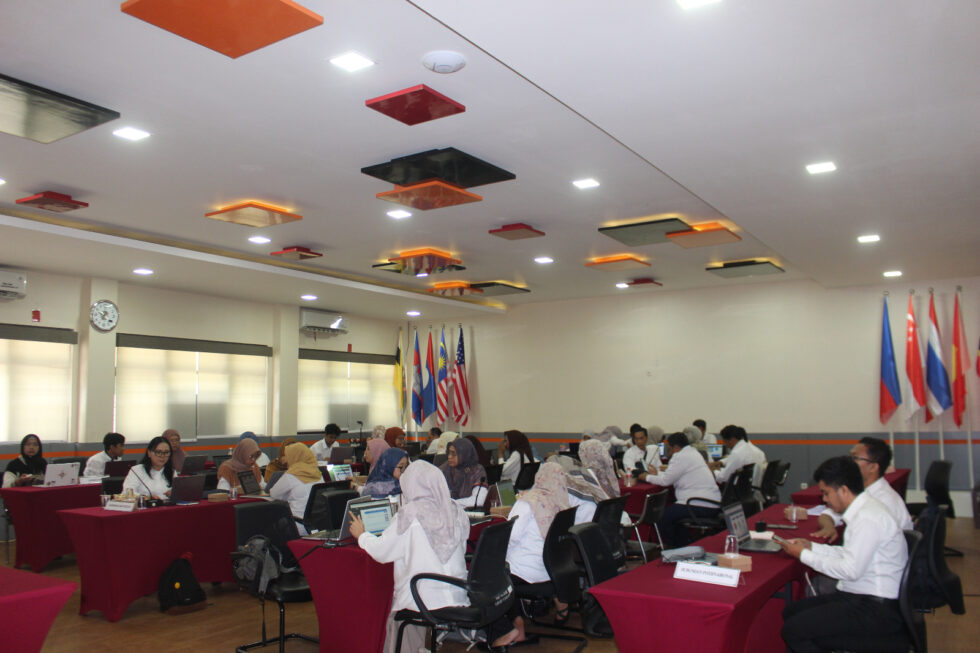
To mark the commencement of the even semester for the 2025/2026 Academic Year, the International Relations (IR) Study Program at the Faculty of Social and Political Sciences (FISIP), Universitas Jember (UNEJ), convened a specialized colloquium focused on mapping learning theories. The forum was attended by the deanery, faculty members, and academic staff, all collaborating to ensure that teaching materials remain highly relevant to contemporary global dynamics.
The primary objective of this colloquium was to align the various learning theories to be delivered throughout the upcoming semester. This alignment is deemed crucial for fostering continuity across different courses, ensuring that students do not merely memorize isolated theories but instead comprehend the interconnectedness of concepts within the broader scope of international relations.
Beyond curriculum synchronization, the meeting served as a collaborative forum for lecturers to map out highly effective pedagogical methods. Given the complexity of contemporary international affairs, this theoretical mapping aims to guarantee that classroom approaches actively stimulate students’ critical analysis skills when evaluating global political, economic, and security phenomena.
“This colloquium reflects the faculty’s ongoing commitment to maintaining high academic standards. Establishing a clear blueprint at the beginning of the term ensures that the teaching and learning process for the 2025/2026 even semester is structured, ultimately yielding optimal results for the students’ intellectual growth.” — Suyani Indriastuti, S.Sos., M.Si., Ph.D., Dean of FISIP Universitas Jember
The intensive session concluded with the formulation of a provisional curriculum matrix, which will serve as a definitive guideline for all course instructors. This proactive measure is expected to elevate institutional standards, producing competent graduates who are fully prepared to compete in both professional and academic arenas upon completing their studies.